
What Is a Personal Guarantee on a Lease? What Business Owners Should Know
When a business rents space, the landlord may ask an owner to sign a personal guarantee. The request can appear in a lease or a separate document, and it may be presented as a routine part of the deal. Its consequences can be significant: depending on the wording, the person who signs may become personally responsible for obligations the business does not satisfy.
This article provides general information, not legal advice. Commercial lease and guarantee terms vary, and the governing law depends on the jurisdiction and the documents. A business owner considering a guarantee may want a lawyer licensed in the relevant state to review the lease and guarantee before signing.
What does a personal guarantee mean?
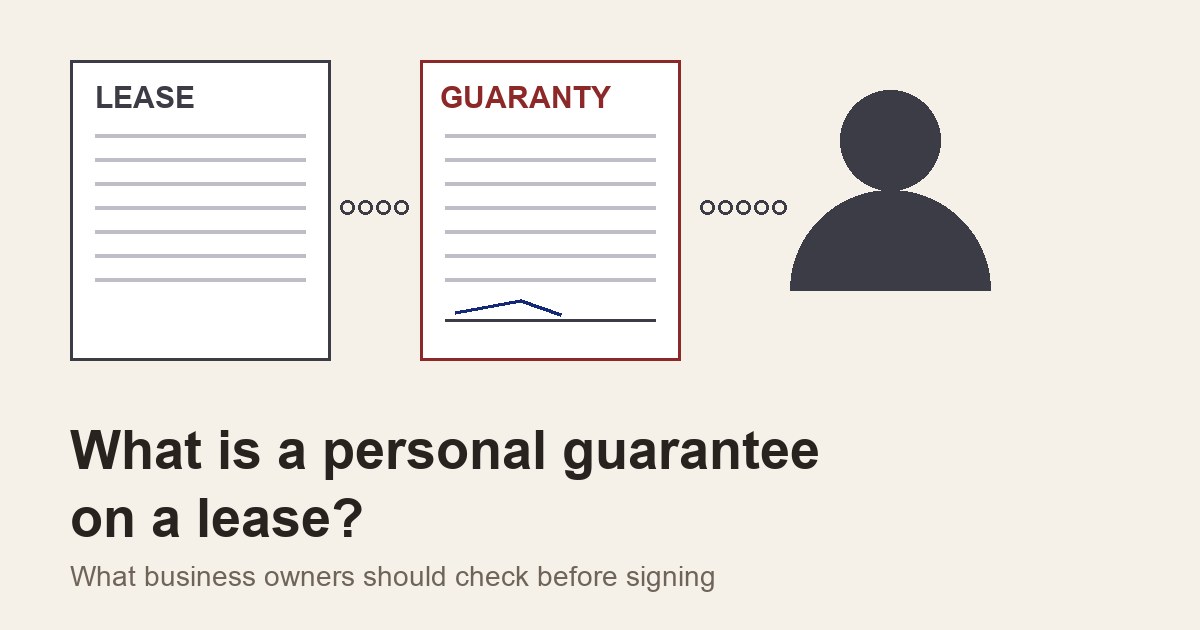
A guaranty is generally a promise by a guarantor to answer for another person’s obligation. In a commercial lease, the business entity is commonly the tenant and the owner or another individual may be the guarantor. If the tenant does not pay rent or otherwise defaults, the landlord may seek recovery from the guarantor according to the guarantee’s terms.
A guarantee is often described as secondary to the tenant’s primary obligation. Cornell Law School’s Legal Information Institute explains that a guaranty claim generally depends on the primary obligor’s breach or failure to perform. Still, the actual rights and procedures depend on the language of the guarantee and applicable law.
A personal guarantee is a separate promise by the individual who signs it. That promise can create personal exposure for the guaranteed obligation.
Why might a landlord ask for one?
A landlord evaluating a business tenant may want additional assurance that the lease obligations will be paid. FindLaw notes that landlords may request personal guarantees from startup businesses without an established track record. A guarantee gives the landlord another potential source of payment if the business cannot meet the lease obligations.
The request does not necessarily mean the landlord expects the business to fail. It is part of how the landlord allocates risk. The tenant and guarantor may still consider whether the scope of that risk is reasonable for their situation.
What can a guarantee cover?
The scope depends on the documents. A guarantee may refer only to rent, or it may extend to other lease obligations. Some guarantees are limited in time or amount; others are broader. A law firm article focused on California commercial leases notes that, depending on the wording, a continuing guarantee may survive amendments, renewals, extensions, assignment, or a sale of the business. It also warns that waived defenses can expand exposure.
Because of that variety, it is important to read the definitions and cross-references, not just the heading. Questions to ask include:
- Which lease obligations are guaranteed?
- Is there a dollar or time limit?
- Does the guarantee continue after a renewal, extension, amendment, or assignment?
- Must the landlord pursue the business first?
- What defenses does the guarantor waive?
- Can the guarantee end after the business performs under the lease for a period?
- Does a spouse or another person also sign?
Answers to those questions should come from the actual documents and, where needed, a qualified lawyer.
Possible negotiation points
Some guarantee terms are negotiable, although a landlord may decline to change them. FindLaw describes a time-limited guarantee and a “good guy” guarantee, which may limit liability through a lawful move-out when rent is paid through departure. The California-focused law firm article also identifies caps, burn-off provisions, limited-duration guarantees, phased reductions, and releases upon assignment as possible approaches.
These terms are not interchangeable. A good-guy clause may contain specific notice, payment, and surrender requirements. A cap may depend on how amounts are calculated. A burn-off may depend on a defined payment history. Precise wording matters, and a summary in an email does not replace the signed document.
Before you sign
Read the lease and guarantee together. Confirm that names, business entity details, lease term, premises, and dates are accurate. Ask for a complete copy of every document you are expected to sign. Note any references to future amendments or renewals and ask whether you will need to approve them.
If the business has other owners, consider whether each person understands what they are being asked to guarantee and whether an internal agreement addresses how owners would share any payment. Keep copies of the signed lease, guarantee, notices, rent records, and correspondence.
If problems arise during the lease, FindLaw notes that early exit options can be limited and may include negotiating an amendment or settlement. The appropriate step depends on the guarantee, the lease, and the parties’ circumstances.
Bottom line
A personal guarantee on a lease is a promise that can make an individual responsible for a tenant’s obligations. It can create exposure even when the tenant is a separate business entity. Understanding its scope before signing—and asking whether limits are possible—can help owners make a more informed decision.
Sources
- Cornell Law School Legal Information Institute, “Guaranty”: https://www.law.cornell.edu/wex/guaranty
- FindLaw, “What Is a Personal Guarantee Commercial Lease and How to Get Out of One”: https://www.findlaw.com/legalblogs/small-business/what-is-a-personal-guarantee-commercial-lease-and-how-to-get-out-of-one/
- Bay Legal, “Personal Guarantees on California Commercial Leases: How to Limit Your Exposure”: https://baylegal.com/personal-guarantees-on-california-commercial-leases-how-to-limit-your-exposure/
- Cornell Law School Legal Information Institute, “Lease”: https://www.law.cornell.edu/wex/lease